

Žurnal in English
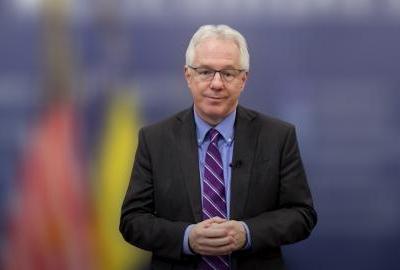
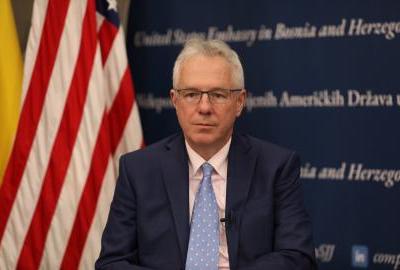
former US ambassador Michael Murphy (1): I don't know if the USA is still committed to the territorial integrity of BiH
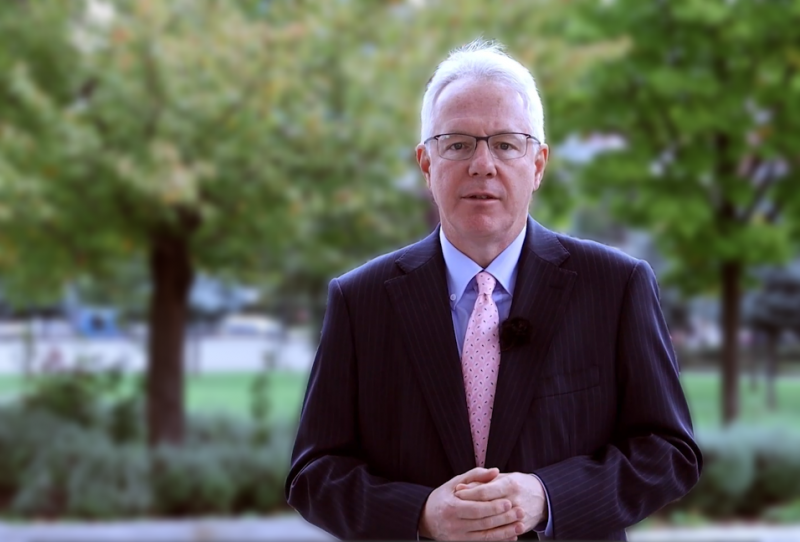
The former, now retired, ambassador of the United States of America to Bosnia and Herzegovina, Michael Murphy, in a big interview for Žurnal, talks about the election of the high representative, the further role of the OHR, Bonn powers, the policy of the US administration towards BiH and the EU, lobbyists Milorad Dodik, Dragan Čović, corruption. We publish the first part of the interview.
- Christian Schmidt's departure as High Representative for Bosnia and Herzegovina undoubtedly marks the beginning of a new phase in the international community's approach to the country. How do you see the role of the High Representative evolving in the period ahead?
OHR and the High Representative are responsible for implementing the Dayton Peace Agreement (DPA). This includes protecting it and the state of BiH from attempts to undermine them. In 2008, the PIC set the 5+2 agenda as requirements BiH political authorities needed to meet for OHR to close. I was a part of those conversations, and at the time, the international community expected BiH political actors to quickly implement the 5+2 agenda. Unfortunately, that did not happen. The BiH political actors now complaining the loudest about OHR are, ironically, those who have done the least to ensure its closure. No one prevented Mr. Dodik or others from negotiating and adopting a Law on State Property, for example. They chose not to do so for almost 20 years, so OHR remains open. The next High Representative will have to devote a considerable portion of time to 5+2 implementation. I want to stress that the 5+2 agenda is about much more than state property. Since 2008, BiH has gone backwards on issues such as fiscal sustainability and the rule of law, which are also part of the 5+2 agenda. Mr. Dodik, Mr. Covic, and Mr. Izetbegovic, who were in power most of this time, are all responsible for the backsliding in these areas.
One last point, the new High Representative will need to respond proactively to attacks on the DPA and the state. The DPA requires functional, efficient, and accountable state-level institutions. Without them BiH cannot survive. Mr. Dodik knows this, which is why he has sought to undermine them. The High Representative cannot allow the state to wither under ethnonationalist assaults or to atrophy because politicians deliberately starve it of resources.
- Schmidt reportedly attributed his resignation to pressure coming from U.S. representatives. In your view, what aspects of Schmidt's mandate were most problematic for the current Trump administration?
My impression is that the administration made a deal with Mr. Dodik about the High Representative. Mr. Dodik agreed to step down from the Republika Srpska (RS) presidency, something he was required to do because of his conviction by the BiH Court, then the administration would remove Christian Schmidt from the position of High Representative. If this was the case, the “problematic” aspect of Mr. Schmidt’s tenure for the administration was likely his use of the Bonn Powers to defend the DPA and BiH from Mr. Dodik’s attacks. If that is correct, it says something about the administration’s agenda for BiH.
The administration maintains it would like to see local political actors reach decisions on their own without the intervention of outsiders. In one sense, this is nothing new. Every U.S. administration since 1995 has wanted exactly the same thing. The key question has always been, are local actors engaging in good faith to resolve differences within the Dayton framework? This has not been the case with Mr. Dodik for a long time. Mr. Dodik’s goal is to dissolve BiH. He is open about it. He is not hiding it from anyone, including the administration. That raises the question, is the administration seeking a negotiation among local actors over BiH’s territorial integrity? That is what Mr. Dodik is asking for when he labels BiH a “failed state” and calls for its dissolution.
One more thought. There are some who say that people supporting the High Representative are trapped in the 1990s. That’s misdirection. If you are looking for someone trapped in the 1990s, it is Mr. Dodik. He once confirmed what happened in Srebrenica in July 1995 was a genocide, now he denies it. He once was critical of war criminals, such as Radovan Karadzic and Ratko Mladic, now he celebrates them and their crimes. He once supported the state institutions necessary for a stable, functional, and efficient BiH, now he seeks to undermine or destroy them. It is Mr. Dodik who seeks to return BiH to the 1990s, not those seeking to protect the DPA and BiH’s territorial integrity from his dangerous agenda.
- Members of the Peace Implementation Council (PIC) have been unable to agree on Schmidt's successor. The United States and Italy reportedly support Antonio Zanardi Landi, while France and Germany are said to favour René Troccaz, who is also backed by the United Kingdom and EU representatives. How do you interpret these divisions among key international actors, particularly given the absence of any clear path toward a consensus candidate?
There have been differences of opinion between the United States and Europe about BiH in the past. During my time in Sarajevo, the United States did not always see eye-to-eye with the EU over every issue, but we shared common strategic objectives. First, we supported implementation of the DPA and BiH’s territorial integrity, and second, we wanted BiH integrated into Euro-Atlantic institutions. Whatever our differences were over communique language or whether and how the High Representative might use the Bonn Powers, our commitment to those shared strategic objectives never wavered.
The divisions on display at the June 3-4 PIC strike me as different. It is not clear the United States continues to share the commitment of its PIC partners to BiH’s territorial integrity. I recognize Secretary Rubio reiterated that support in his Congressional testimony last week, and while his statement was welcome, it has not always been reflected in administration policy. At last month’s UNSC session on BiH, the U.S. representative made no mention of it, and the deal the administration struck with Mr. Dodik in late October 2025 seems to have emboldened him. It is hard to make a credible claim that the deal resolved the crisis in BiH. Mr. Dodik may have made a lot of promises to the administration in return for the lifting of sanctions and the removal of Christian Schmidt, but his rhetoric and his lobbying contracts make clear he is not keeping them.
Given all of this, it would not be unreasonable for others around the PIC table to have concluded that the U.S. no longer shares common strategic objectives with them in BiH. This makes the differences on display last week deeper and more serious than what we have seen in the past.
- What do you think the United States would expect and probably get from Antonio Zanardi Landi, and what do you believe EU member states are looking for in René Troccaz?
I do not want to speak for the Europeans about their decision to propose Rene Troccaz for High Representative. They are better positioned to discuss this than I am. With regard to the U.S. decision to put forward Antonio Zanardi Landi – and make no mistake, he is the U.S. candidate for High Representative – I see a paradox. The administration has been critical of the OHR, the High Representative, and the Bonn Powers. It has called for “local ownership” and an end to outside intervention. So, why is the administration proposing any candidate for High Representative? Why isn’t it just advocating for OHR’s closure and folding the outstanding 5+2 tasks into the EU accession process? The administration must want something from a High Representative, a High Representative that it believes, rightly or wrongly, it would control. I do not know what that is, but given the administration’s embrace of Mr. Dodik, I understand why people sitting around the PIC table may have concerns.
- The latest U.S. State Department report on the Western Balkans focuses primarily on American commercial interests, energy issues and bilateral relations, while EU enlargement and NATO integration receive relatively little attention. Some analysts argue that weakening coordination between Washington and Brussels is creating a strategic vacuum that could slow reforms across the region. How significant do you believe the gap between the Trump administration and the EU is, and what impact could it have on Bosnia and Herzegovina and regional stability?
I think it is fair to conclude that the current administration does not like the European Union. That disdain has manifest itself across Europe, not just in the Western Balkans. Nonetheless, I do not think the failure of Washington and Brussels to coordinate on reforms in the Western Balkans has had the impact your question implies, at least not in every Western Balkan country. For example, both Montenegro and Albania are making progress in their EU accession process despite Washington’s attitude about the organization, and this I think, is good for the U.S., even if some Americans cannot see it.
BiH is different. The reform process has indeed stalled, but not because of differences between Washington and Brussels. It has stalled because the country’s ethnonationalist political leaders have deliberately blocked it. Here the blame lies first and foremost with Mr. Dodik. Mr. Covic also shares some responsibility because he continues to provide Mr. Dodik with de facto support despite Mr. Dodik’s blockade of BiH’s European path. This is not the behavior of someone truly committed to Europe. The European Union does itself and its accession process no favors by pretending the blame for the Council of Ministers’ and BiH Parliamentary Assembly’s failures can be equally apportioned across all parties.
- Alongside discussions about Schmidt's successor, there has also been considerable debate about the future of the Office of the High Representative (OHR) itself. One of the key issues concerns the future of the Bonn Powers. Do you believe the role of the High Representative remains meaningful without the authority provided by the Bonn Powers?
It makes little sense to keep the OHR open and appoint a new High Representative while at the same time constraining or preventing the new High Representative from using the Bonn Powers when necessary. The OHR is not about “nation building” or constructing someone’s ideal of a “civic state.” It is about implementation and defense of the DPA. Among other things, this means protecting BiH and its institutions from attempts to undermine them, including those institutions agreed upon by post-war governments such as the Armed Forces of BiH. It is blindingly obvious, or at least it should be, that certain local political actors, most prominently Mr. Dodik, are undermining the DPA and threatening BiH’s territorial integrity. This simple fact explains why the OHR remains necessary, and the OHR cannot do its job with a High Representative who lacks PIC support to use the Bonn Powers when necessary.
- During your time as U.S. Ambassador to Bosnia and Herzegovina, High Representative Christian Schmidt used the Bonn Powers on several occasions to initiate political changes. Were you involved in discussions regarding whether and how those OHR decisions would be made?
Until this administration, it has been long-standing U.S. policy to support the High Representative, including his use of the Bonn Powers. Since 1995, all U.S. Ambassadors have sought to build a strong working relationship with the High Representative. I tried to do the same. Like all my predecessors, I outlined U.S. views about the situation in BiH to the High Representative. In turn, the High Representative shared with me his assessments of the situation in BiH as well as steps he believed necessary to prevent BiH political actors from undermining the DPA, the state, and state-level institutions. This included challenges coming from the entities, whether direct attacks on the DPA or crisis-inducing governance failures within them. As you might imagine, the High Representative had similar discussions with other PIC ambassadors. That was the context in which I discussed use of the Bonn Powers with Christian Schmidt. I participated in many similar discussions at meetings of the PIC Steering Board Ambassadors and in bilateral meetings with colleagues. And as you know, the United States supported Christian Schmidt when he used the Bonn Powers, just as it supported past High Representatives when they made use of them. That was the right policy, but the decision about when and how to use the Bonn Powers rested entirely with the High Representative, just as it always has.
- Would you still support the decisions made by the High Representative at that time?
Yes, I think United States support for the High Representative and use of the Bonn Powers was correct. Again, we would have welcomed constructive dialogue among local political actors that led to local solutions to BiH’s challenges, but that was not what was happening. By the time I returned to Sarajevo as Ambassador, the country’s ethnonationalist political leaders had been operating in a consequence-free environment for over a decade. Consequently, whether they were based in Sarajevo, Banja Luka, or Mostar, they had concluded, not without reason, that they had a free hand to pursue their narrow, often corrupt, interests at the expense of the DPA and BiH. Over the years, the international community gave them an inch, then another inch, and then another, and they responded by taking miles.
It is the High Representative’s job to respond to these types of challenges that had been posed to the DPA and BiH, including by using the Bonn Powers when necessary. The United States believed the international community could no longer afford to give ethnonationalist political leaders a free hand to pursue destructive agendas. Of course, all these ethnonationalist political leaders, again whether based in Sarajevo, Banja Luka, or Mostar, presented themselves as saints and the others as sinners. They may even have convinced themselves that this was true, but it was objectively false. So, when the High Representative tackled a problem for which the political leader was fully or partially responsible, they attacked the High Representative and bemoaned the use of the Bonn Powers even as they welcomed the use of the Bonn Powers at the expense of a rival.
Take the October 2022 imposition as an example. One of the parties now complaining about the Bonn Powers and calling for OHR’s closure welcomed the October 2022 imposition. Some of those who protested it had privately acknowledged the need for it and/or had agreed to similar proposals during the 2021-2022 U.S.-EU constitutional reform talks. Indeed, they had agreed to less advantageous proposals than what was in the final imposition. Some analysts made knowingly specious claims about it, such as the High Representative’s action changed peoples’ votes. To put it kindly, this is impossible given that the Federation House of Peoples is not directly elected. I think the October 2022 imposition was and remains one of the most deliberately misrepresented and misunderstood of Christian Schmidt’s use of the Bonn Powers.
- Do you believe Christian Schmidt should have used the Bonn Powers more frequently, or do you think he already relied on them too much?
During my time in BiH, it was U.S. policy to support use of the Bonn Powers when necessary. Those words – “when necessary” – are important. They represented a change from previous policy, which had supported use of the Bonn Powers “as a last resort.” The change reflected an assessment that rising ethnonationalism, corruption, and institutional decay, if left unchecked, presented an existential threat to BiH. In other words, these trends threatened the number one U.S. strategic interest in BiH – the country’s territorial integrity. The United States still believed, that over the long term, the best means of safeguarding BiH’s territorial integrity was anchoring it within Euro-Atlantic institutions. However, the U.S. had concluded that the “European perspective,” which had largely defined international community engagement in BiH from 2008 forward, was by itself sufficient to accomplish this goal. The European perspective failed to prevent backsliding in BiH, which essentially continued unchecked for almost 15 years and reached a dangerous crescendo in 2021 with Mr. Dodik’s “Independent Srpska Plan.” It was at this point that the United States assessed the international community needed to push back against the threats posed to BiH’s territorial integrity, not least those presented by Mr. Dodik and his agenda. This meant, among other things, making greater use of the Bonn Powers – when necessary – to defend the DPA, BiH, and BiH institutions.
- As expected, many of Christian Schmidt's decisions faced resistance from local political leaders. Some of those reactions significantly destabilised the political situation in Bosnia and Herzegovina. In your view, did Schmidt's use of the Bonn Powers ultimately worsen the political and security environment, or did it help address important problems facing the country?
Local political actors, particularly Mr. Dodik, but not only Mr. Dodik, are responsible for BiH’s problems – for rising ethnonationalism, for attacks on the DPA, for undermining BiH institutions, for rampant corruption. This is the source of the worsening political and security environment in the country. For years, Mr. Dodik and other ethnonationalist leaders took advantage of the international community’s failure to respond to their destructive actions. BiH and its citizens suffered as a consequence.
As I already noted, for too long, the international community either averted its eyes, pretended the problems did not exist, or clung to its faith that the European perspective would eventually change political leaders behavior. Again, the U.S. assessment was that this approach was not working, and that the international community needed respond directly to the challenges posed by the agendas of the country’s ethnonationalist leaders.
Not surprisingly, Mr. Dodik and others were unhappy with the more robust international community or American response to their actions. They often responded, at least in part, by doubling down on the rhetoric and actions that had created a crisis in the first place, and then they blamed the international community for the consequences of those new actions. The logic is preposterous.
When someone spends more than a decade metaphorically punching you in the face every day, and then one day you finally respond – whether through a clear and direct public statement, sanctions, or use of the Bonn Powers – you are not making the situation worse. You are responding to a provocation and doing what you should have done long ago.
- During your time as ambassador, were there any decisions that you believe the High Representative should have taken but did not? If so, which ones?
I am reluctant to second guess the High Representative, but as a rule, the United States did not believe the High Representative should be shy about making use of the Bonn Powers when necessary. Unfortunately, BiH political leaders have been unprepared to sit down and negotiate in good faith on issues, which if resolved, would provide the country’s citizens with the peaceful, prosperous, and democratic future they want and deserve. I saw this first hand many times, including during the U.S.-EU facilitated constitutional reform talks. Political leaders either refused to negotiate at all, or when they came to the table, they made knowingly outlandish proposals and/or defined compromise as getting 100 percent of what they wanted. This remains a problem. Ms. Cvijanovic is fond of telling international interlocutors that the RS is ready for constructive dialogue. This claim is belied by her boss, Mr. Dodik, who continues to say things like, “BiH needs to be dismantled”, or “The greatest weakness of Dayton is that it enabled the survival of BiH,” or finally, “Peaceful disassociation in BiH and independence of Republika Srpska. Those are my ultimate political and life goals.” What kind of basis for dialogue is that?
- During your mandate in Bosnia and Herzegovina, was there consensus among PIC members regarding the High Representative's decisions, or did divisions like those we see today also exist at that time?
As I noted earlier, there were, from time-to-time, differences of opinion between the United States and the European Union as well as among PIC members on issues, including on decisions taken by the High Representative. Sometimes, our discussions were heated, but at the end of the day, these were differences over tactics, not disagreements over strategic objectives. Every country on the PIC supported BiH’s territorial integrity and its integration into Euro-Atlantic institutions. Again, as I mentioned earlier, the divisions we are seeing now strike me as deeper and more fundamental. They are strategic, which is disturbing.
(End of part one. We will publish the second part of the interview tomorrow, Thursday, June 11th.)
(zurnal.info)